L
★★★★★Sophie is professional and speaks English. After my first session I had proper relief from my sciatica pain. Now she's my go-to chiropractor.
Yes, a chiropractor effectively treats herniated discs through spinal decompression and adjustment techniques. The goal is to reduce pressure on the disc and nerves, relieve pain, and avoid surgery in the vast majority of cases.
A herniated disc is one of the most common spinal conditions, affecting approximately 2% of the French population each year. It occurs when an intervertebral disc ruptures and its nucleus protrudes, compressing the surrounding nerve structures. In Paris, a sedentary lifestyle, long commutes, and heavy lifting significantly increase this risk.
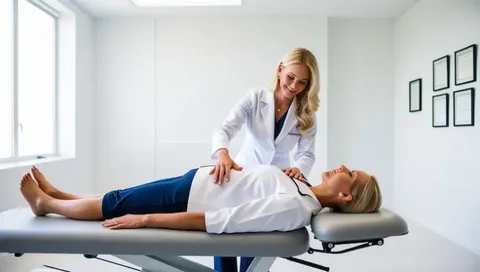
Chiropractic offers a conservative and non-invasive approach to treating herniated discs. Sophie Baltaci, IFEC-qualified chiropractor and AFC member, supported by her associate Sarah Depuydt, uses gentle spinal adjustment techniques at her practice in Paris's 2nd arrondissement, specifically adapted to disc fragility, to reduce nerve compression and promote the disc's natural healing process.
A herniated disc is a common cause of sciatica and back pain.
Appointments available within 24h. Relief from the first session.
★ 5.0/5 · 164 reviews on Google
Symptoms vary depending on the location of the hernia (cervical, thoracic or lumbar) and the degree of nerve compression.
The pain follows the path of the compressed nerve: sciatica for lumbar herniated discs (radiating into the buttock, thigh, and calf), cervicobrachial neuralgia for cervical herniated discs (pain in the arm and hand). This pain is often described as burning or an electric shock.
Numbness, tingling (paresthesia), and loss of sensation in the affected nerve area. In more advanced cases, muscle weakness may occur, making walking or grasping difficult.
Significant spinal stiffness, antalgic postures (the body bends to avoid pain), and an inability to maintain certain postures. Coughing, sneezing, and exertion typically worsen the symptoms.
A herniated disc results from a combination of mechanical and degenerative factors that chiropractic can address.
The natural aging of the disc (loss of hydration, micro-fissures in the annulus fibrosus), aggravated by repeated mechanical stresses: prolonged poor posture, lifting heavy loads with incorrect technique, vibrations (driving), and excess weight. Biomechanical imbalances in the spine accelerate this degeneration.
A sedentary lifestyle weakens the muscles that support the spine. Prolonged sitting increases intradiscal pressure by 40% compared to standing. Chronic stress causes muscle tension that alters spinal biomechanics and promotes herniated discs.
Chiropractic is recommended as a first-line treatment for uncomplicated disc herniation, before considering more invasive options.
Specific chiropractic adjustments using flexion-distraction, a gentle technique that creates negative space within the disc, promoting the retraction of the herniated material. This method is particularly effective for lumbar herniated discs and requires no forceful manipulation.
Progressive joint mobilization techniques restore segmental mobility without aggravating the herniation. Working on the soft tissues (muscles, fascia) reduces protective spasms and improves local circulation, accelerating the healing process.
A program of spinal stabilization exercises (core strengthening), postural and ergonomic education, and advice on managing daily activities. The goal is to prevent recurrence by strengthening the spinal support structures.
A complete clinical examination is performed, including neurological tests (reflexes, sensation, muscle strength), specific orthopedic tests (Lasègue test, Slump test), and postural analysis. Analysis of your imaging studies (MRI, CT scan) is integrated to confirm the diagnosis and guide treatment.
Depending on the severity and location of your hernia, a tailored treatment plan will be developed. The initial sessions will focus on relieving acute pain, followed progressively by functional restoration and prevention of recurrence.
Alongside your chiropractic treatment, these practical tips help protect your intervertebral discs and support healing.
Clinical studies show that 60 to 80% of patients with herniated discs experience significant improvement with conservative chiropractic treatment, thus avoiding surgery. The World Health Organization (WHO) recognizes chiropractic as a validated treatment option for disc disorders. In our practice, the majority of our patients report a noticeable reduction in pain within the first 4 to 6 weeks of treatment.
Appointments available within 24h. Relief from the first session.
★ 5.0/5 · 164 reviews on Google
164 reviews on Google
Verified reviews from patients who visited our practice
Sophie is professional and speaks English. After my first session I had proper relief from my sciatica pain. Now she's my go-to chiropractor.
Je la recommande vivement. À chaque séance, elle parvient à libérer les tensions au niveau du cou, des épaules ou du dos, toujours avec précision et une grande douceur. Le suivi est rigoureux, l'accueil est chaleureux et les résultats sont vraiment remarquables. Professionnelle, efficace et à l'écoute : un vrai soulagement à chaque fois.
J'ai consulté plusieurs fois pour des douleurs et chaque séance m'a apporté un vrai soulagement. Sophie est à l'écoute, explique les gestes clairement, et les effets se ressentent rapidement. Je la recommande vivement, autant pour son professionnalisme que pour la gentillesse de l'accueil !
Elle m'a suivie avant, pendant et après ma grossesse. Elle a grandement contribué à mon bien-être durant cette période. C'est une vraie magicienne qui débloque les tensions persistantes. Je la recommande !
Super thérapeute, je suis venu pour des douleurs cervicales récurrentes avec des maux de tête, et après 2-3 séances, je n'avais plus aucune douleur ! Je recommande vivement !
Je suis venue avec mon mari car je souffrais d'intenses douleurs cervicales depuis plusieurs années. Je détestais qu'on me touche le cou. Sophie m'a tout expliqué et m'a mise à l'aise. Après seulement deux séances, j'ai senti une différence significative. Depuis, j'aime y aller régulièrement pour soulager les douleurs liées à la posture et au stress.

Reviewed by Sophie Baltaci, Chiropractor
IFEC Graduate, RPPS No. 10010348356
Member of the French Chiropractic Association
Learn more about our team →
Chiropractic diagnosis and treatment of back and lumbar pain.
Natural treatment for sciatica and sciatic nerve pain.
Chiropractic treatment of cruralgia: femoral nerve pain, front-of-thigh pain.
Visit our chiropractic practice in central Paris and book your appointment with Sophie Baltaci.
Don't wait for your herniated disc to worsen. At Sophie Baltaci Chiropractor's office in Paris's 2nd arrondissement, we offer expert and personalized care for herniated discs, using gentle and proven techniques. Book an appointment now to regain your mobility and quality of life.
The information on this site does not replace a medical consultation. For any health concern, consult a qualified healthcare professional.
★★★★★ 5.0/5 · 164 reviews on Google
Book an appointment